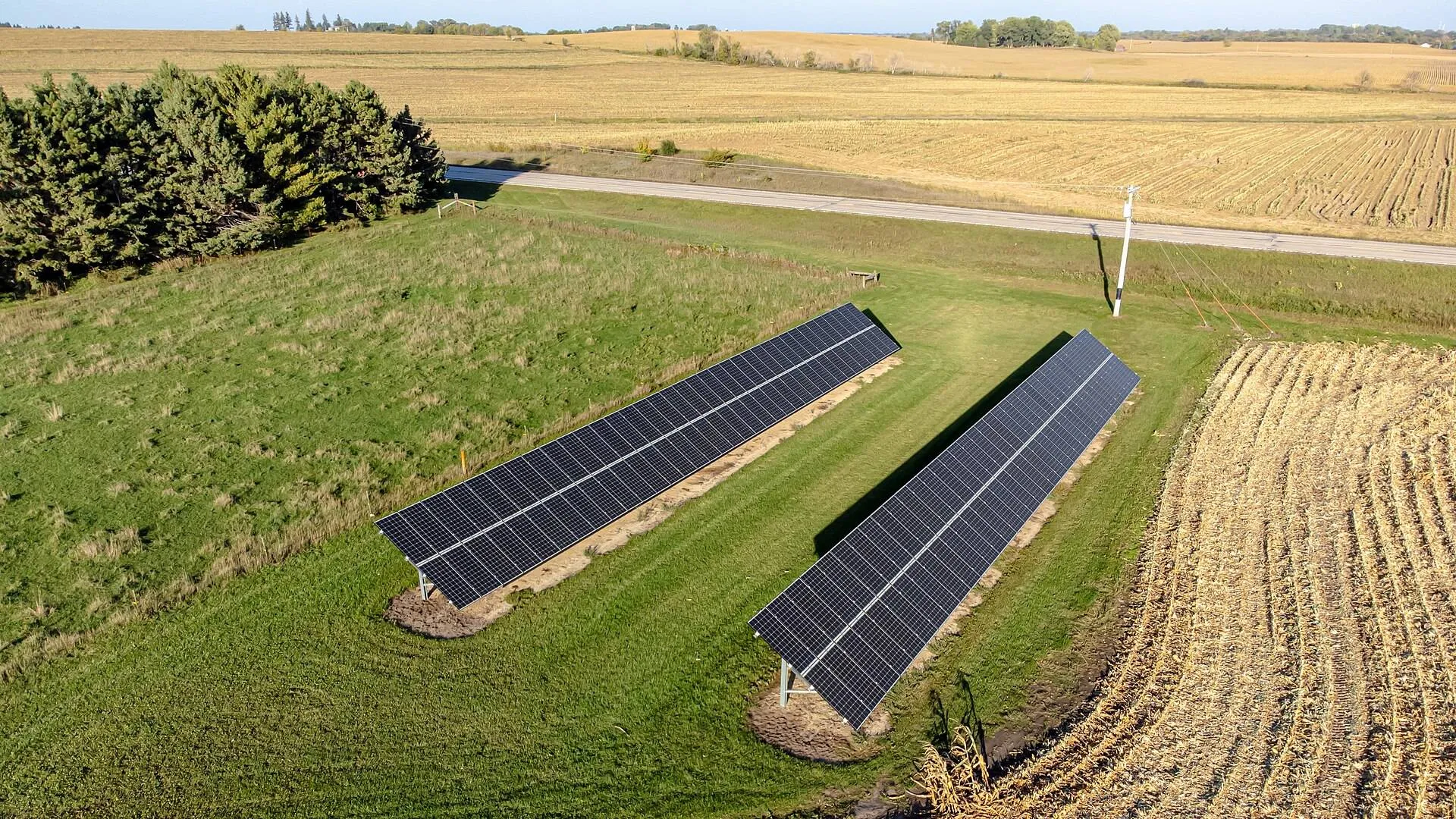
Grid-interactive rooftop solar installations rely fundamentally on Net Metering to convert solar sunshine into round-the-clock utility bill savings. In Chhattisgarh, net metering is governed by the Chhattisgarh State Electricity Regulatory Commission (CSERC) Grid Interactive Distributed Renewable Energy Regulations and executed locally by CSPDCL (Chhattisgarh State Power Distribution Company Limited).
How Net Metering Transforms Your Electricity Bill
During daylight hours, solar panels power your appliances first. Any excess electricity flows backward into the CSPDCL distribution grid, spinning your meter in reverse. At night, you seamlessly draw power from CSPDCL. Your monthly bill reflects only the net difference.
The Two Meters in a CSPDCL Grid-Connected System
- Solar Generation Meter: Measures total gross electricity produced by your solar array before any household loads consume it. This is crucial for verifying system performance and green generation credits.
- Bi-directional Net Meter: Replaces your traditional single-phase or three-phase CSPDCL energy meter. It contains dual registers:
- Import Register (kWh): Records electricity drawn from CSPDCL when solar output is lower than consumption (such as night time or heavy rain).
- Export Register (kWh): Records surplus clean electricity sent into the CSPDCL grid during peak sunny hours.
CSERC Energy Banking & Settlement Cycle
One of the greatest advantages for solar consumers in Chhattisgarh is energy banking:
- Monthly Rollover: If your solar system exports 450 units in a sunny month but your home consumes only 350 units, the remaining 100 surplus units are not lost. They are credited and carried forward to the next billing cycle.
- Annual Settlement: The banking settlement cycle runs from April 1st to March 31st every fiscal year. At the close of March, any remaining accumulated surplus units are compensated by CSPDCL at the Average Power Purchase Cost (APPC) rate determined by CSERC.
- Exemption from Grid Support Charges: Under CSERC 2026 notifications, all residential systems up to 10 kW connected to low tension (LT) are 100% exempt from wheeling, banking, and grid support charges.
Distribution Transformer (DT) Capacity Constraints in Jagdalpur
According to safety norms, the maximum cumulative capacity of rooftop solar systems connected to any local distribution transformer in Jagdalpur must not exceed 80% of the transformer’s rated KVA capacity. Because solar adoption is surging across residential areas like Dharampura, Maharani Ward, and Geedam Road, reserving transformer capacity through early TFR application is essential before local transformer saturation occurs.
CSERC Regulatory Framework & Benefits at a Glance
| Regulatory Parameter | CSPDCL / CSERC Mandate (2026)* | Real-World Advantage in Bastar* |
|---|---|---|
| Metering Infrastructure | Bi-directional Smart Net Meter | Records both grid import and peak solar export on 15-minute intervals |
| Energy Banking Cycle | Annual (April 1 to March 31) | Surplus winter/summer solar units roll over monthly to offset monsoon deficits |
| Surplus Settlement Rate | Average Power Purchase Cost (APPC) | Direct financial settlement credited by CSPDCL at annual fiscal close |
| Grid Support Charges (GSC) | 100% Exempt (≤ 10 kW LT Residential) | Zero transmission, wheeling, or standby surcharge on residential consumers |
| Transformer Capacity Cap | 80% of Local DT Rated KVA | Guarantees grid stability; early TFR clearance prevents neighborhood lockout |
* Grid & Discom Advisory (Verified 19-09-2026): Net metering procedures reflect CSERC Distributed Renewable Energy Regulations and active CSPDCL circulars as of September 19, 2026. Meter testing, CT/PT ratios for installations above 10kW, and distribution transformer loading limits are strictly enforced by the CSPDCL Jagdalpur circle office.